Exotic Pets

Bengal Beginnings – Exotic Cat Breeds

SookieIn 1984 a new breed of cat became recognized into the International Cat Association, and since then it has become one of, if not the most popular cat breed in the United States today. I am of course talking about the sleek and stylish Bengal, which is in my opinion the Maserati of cat breeds. Originally crossed from the wild Asian Leopard cat, this cute, adventurous, and sometimes trouble making feline has worked its way into the hearts and homes of cat enthusiasts everywhere, including mine. Detracting from my usual blogs on small animals, I’d like to share with you a little bit about this cat and why I ended up with one.

The genetic make-up of the original Bengal went further than just an average house cat and a wild animal. They share traits with many other breeds including Egyptian Mau, Burmese, Abyssinian, and the American Shorthair. The producer of the Bengal breed was an American named Jean Sudgen, who crossed a black tom cat with a female Asian Leopard cat in the 1960s. From then on, further crossing experiments eventually gave way to the breed we know and love today. The Bengal combines the beautiful patterns of wild cats with the affectionate, adaptable personality of the domesticated cat, giving cat lovers a little taste of the wild with the convenience of being able to keep their pets just like any other house cat. More >

Vote This Post DownVote This Post Up (+2 rating, 2 votes)
Loading ... Loading ...

Volunteer Opportunities in Zoos, Aquariums, Museums and Nature Centers

Frank with SlothHello, Frank Indiviglio here.  I consider myself extremely fortunate in having been able to spend a lifetime working in zoos with animals from all over the world.  However, zoo work is not for everyone – even those who are passionate about wildlife may become frustrated by the lack of opportunities (not to mention the exceedingly low salaries!).  There is, however, a very pleasant alternative for those who wish to be around exotic creatures on a regular basis– volunteering.  Many zoos, aquariums, nature centers and museums accept volunteers, and most provide extensive training.  More >

Vote This Post DownVote This Post Up (No Ratings Yet)
Loading ... Loading ...

Exotic Pet Possibilities, Part 2 – Sugar Gliders, Degus, Hedgehogs and Spiny Mice

Sugar GliderHello, Frank Indiviglio here.  Pygmy Mice, Ground Squirrels, Civets – all sorts of interesting small mammals have found their way into the pet trade and are regularly being bred.  Please see Part I of this article for a look at my favorite, the Flying Squirrel. Today I’d like to introduce several others that I’ve enjoyed keeping and learning about.

Note:Please see Part I of this article for health-related and legal considerations.  More >

Vote This Post DownVote This Post Up (+1 rating, 1 votes)
Loading ... Loading ...

Exotic Pet Possibilities – Part 1 – Flying Squirrels

Flying SquirrelHello, Frank Indiviglio here. An amazing array of unusual small mammals have long been bred in captivity and sold within a rather small circle of exotic pet enthusiasts. Some, such as Fennec Foxes and Bennett’s Wallabies, are suitable only for well-experienced keepers with ample room and resources while others, including Servals and Coatimundis, can be downright dangerous and are best enjoyed in zoos or the wild. Today I’d like to introduce an animal that, while not suitable as a “first-time pet”, is a great choice for experienced hobbyists looking to expand their pet-keeping horizons. I’ll cover captive care in greater detail in future articles and move on to Sugar Gliders, Degus, Hedgehogs and Spiny Mice in Part 2.

Note: Be sure to check your state’s laws regarding exotic pets…please write in if you need help in locating this information.

It is imperative that you locate an experienced exotic mammal veterinarian before deciding to keep any of the animals mentioned below. You should also consult with your family doctor regarding any potential health hazards. More >

Vote This Post DownVote This Post Up (+1 rating, 1 votes)
Loading ... Loading ...

A 140 Pound Guinea Pig?…Capybaras and other “Zoo Pets”

Hello, Frank Indiviglio here.  Life as a zookeeper provided me with countless unforgettable experiences.  I place rearing orphaned mammals – creatures I never expected to see up close, much less handle – right at the top of my list.  I’ve had the great fortune to have raised a number of species (i.e. Snow Leopards, Gorillas, Wolves, Red Pandas), but it is the good-natured Capybara that I remember most fondly.

Observations in Venezuela

Capybara baskingLargest of the world’s rodents, Capybaras inhabit river edges and flooded grasslands from Panama to northern Argentina.  Quite common on a cattle ranch in the Venezuelan llanos where I was involved in Green Anaconda research (please see Hunting Anacondas in the Venezuelan Llanos), I was able to spend a great deal of time observing them. 

Near the ranch buildings, they were quite tame, even wandering through open doors on occasion.  The Capybaras that lived further out on the llanos, however, were entirely different creatures.  Their meat is considered a delicacy, and they have learned to charge headfirst into the water, uttering their strange “barks”, upon sighting people.

A Capybara Ruins my Film…

The Capybara is a highly social animal.  Females are very protective of their

young (I’ve seen them stand between intruders and their litter on many occasions), and the dominant male will try to hold off a threat while his harem flees. 

Well, not always…while explaining this very behavior during the filming of a sequence on Capybaras, I was made to look foolish by a male who considered chivalry quite dead.  Approaching a group by boat and with my back to the Capybaras, I rambled on about the male’s soon-to-be-seen valor.  Noticing my colleagues laughing hysterically, I turned to see him disappearing into the brush, leaving his females and offspring unprotected and confused!

Capybaras as “Pets”

Capybara mother and youngBaby Capybaras, or “Chiguires”, as they are known in Venezuela, are often taken in and raised until their care becomes too much of a burden (multiply your Guinea Pig’s droppings a thousand-fold, add the need for a pond, and you’ll see why they are not ideal house pets!).  After that, they are kept at semi-liberty – feeding largely on their own but returning to their adopted families regularly.  On many Venezuelan ranches, Jaguar, Puma, Caiman and Anacondas render life dangerous for a solitary Capybara unschooled in the ways of the wild, and I imagine that some meet their end when they wander too far afield.

I cannot recommend a Capybara as a pet – their teeth are not to be believed, and throughout their range stories persist of hunters and horses killed by bites that severed leg arteries.  And no matter how well adjusted, any wild animal remains wild – those that become very calm are in a sense all the more dangerous, as it is easy to forget that they are not domesticated.  However, cared for in a zoo setting, by well-experienced keepers, Capybaras make ideal animals for use in educational programs.  They are just as responsive as their cousins, the Guinea Pigs, and readily bond to people who care for them…and it’s hard to put into words the looks on the faces of children when a “tame” Capybara enters the classroom! 

Learning More

If you are interested in working with wild mammals, consider becoming a licensed Wildlife Rehabilitator.  Learn more here.

I was surprised to learn that a small population of Capybaras – released pets, no doubt – thrives in northern Florida.  For more info, please see this article.

Please write in with your questions and comments. 

Thanks, until next time,

Frank Indiviglio

Vote This Post DownVote This Post Up (No Ratings Yet)
Loading ... Loading ...

It’s Spring…Here Come the “Orphaned” Wild Animal Babies!

Frank and Wallaby
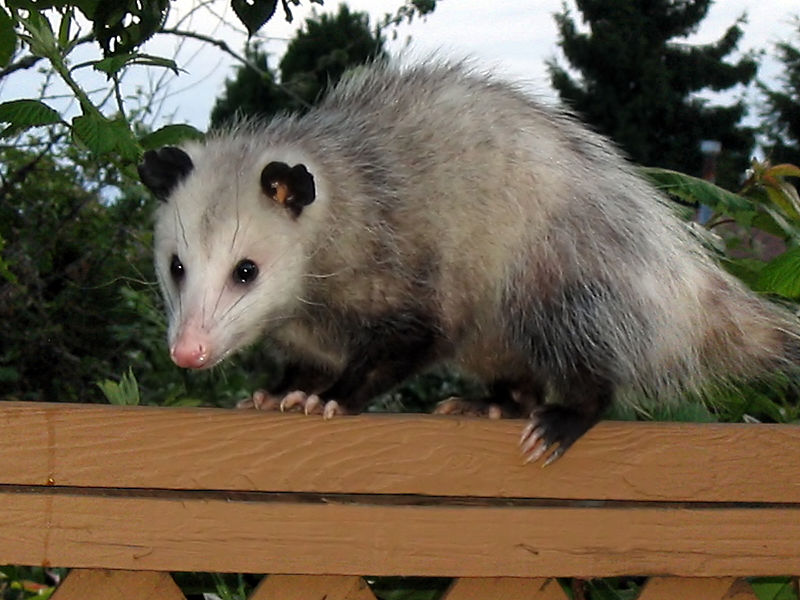
Hello, Frank Indiviglio here.  Once you acquire the reputation of being a skilled pet-keeper (or of having a soft heart!), springtime may bring with it requests from well-meaning folks that you care for “abandoned” animal babies they have found.  In my long experience as a wildlife rehabilitator I have raised Flying Squirrels, Opossums, Raccoons, Muskrats and many other furry friends (the oddest being a Star-Nosed Mole!) – very rewarding work, but not to be taken on lightly. More >

Vote This Post DownVote This Post Up (+2 rating, 2 votes)
Loading ... Loading ...